Tesla just changed the European FSD conversation again. This time the argument is not another promise, another “coming soon”, or another perfect demo clip. It is data.
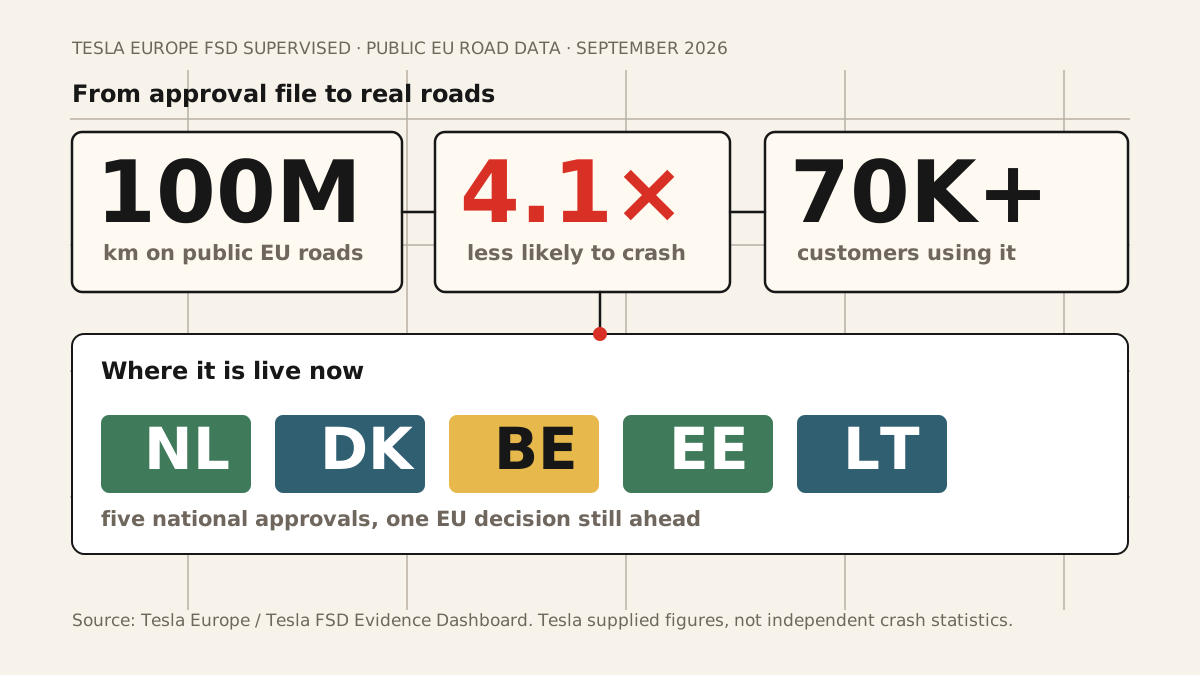
Ahead of a possible EU approval vote on 6 October 2026, Tesla Europe says it has published the evidence dashboard behind the European FSD Supervised application. The headline is big: FSD Supervised is approved in five EU countries: the Netherlands, Denmark, Belgium, Estonia, and Lithuania. Tesla says more than 70,000 customers are using it, the fleet is covering more than 1 million km per day, and the dataset now spans 100 million km on public roads in Europe. Tesla says that makes it 4.1x less likely to get into a crash than manual driving.
It is a serious claim, and it is still Tesla’s claim. Both matter.
The useful part is that Europe now has something better than speculation. Five countries have it on public roads. Customers are using it every day. The fleet is building real mileage quickly. Regulators have a dashboard to argue over instead of a brand war.
Good. That is a healthier debate.
Because FSD Supervised in Europe is no longer a theoretical feature trapped behind approvals. It is an active supervised driving system being used in normal European traffic.
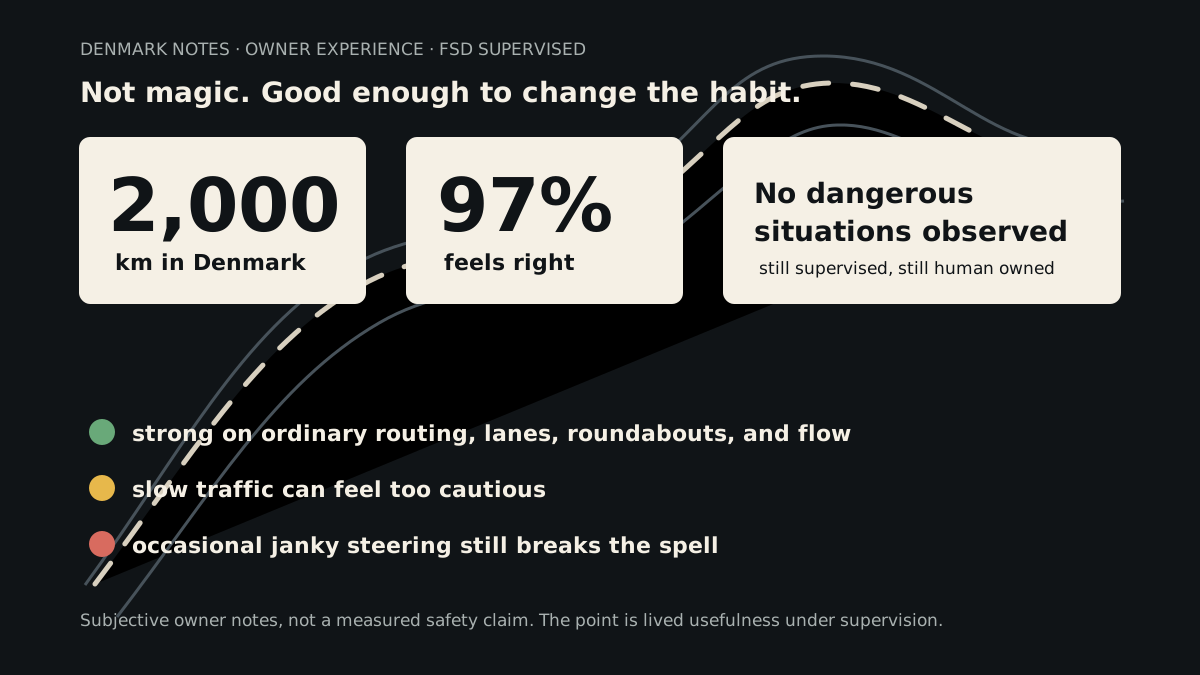
I know, because I have now done more than 2,000 km with it in Denmark.
My Denmark read: 97 percent useful, not 100 percent trustworthy
After 2,000+ km, my read is simple: it is unbelievable how good this has become, and no, it is not perfect.
That distinction matters. The fanboy version says the car drives itself and the argument is over. The skeptic version says every weird steering moment proves the whole thing is theatre. Both takes are lazy.
Neither matches the actual experience.
My version is simpler:
It feels right about 97 percent of the time.
That is not a measured scientific statistic. It is how it feels from the driver seat after using it on Danish roads: city traffic, ordinary streets, roundabouts, motorway, lane changes, turns, slow queues, and the boring edge cases that decide whether a feature becomes part of daily life.
The good part is very good. It handles a lot of normal driving with a calmness that would have sounded silly a few years ago. It sees structure in situations older driver assistance systems treated like chaos. It changes the job from “drive every meter” to “supervise a system that is usually doing the right thing.”
The remaining three percent still matters.
Sometimes it is too slow in traffic. Sometimes the steering has a small janky correction that makes you look up immediately. Sometimes it chooses a line that is not dangerous, but not quite human either.
I have not had dangerous situations with it.
That does not mean danger is impossible. It means the rough edges I have seen so far are mostly comfort, confidence, and judgment issues: slow decisions, odd movement, tiny moments where the car breaks the illusion that it understands the road exactly the way you do.
So yes, it is still a supervised product. It should be.
The new data makes the regulatory debate less abstract
Tesla’s latest European update matters because it moves the discussion from “should Europe allow this?” toward “what does the evidence show, and what standard should it meet?”
According to Tesla’s own European material, the system now has:
- 100 million km of FSD Supervised driving on public roads in Europe
- 70,000+ customers
- 1 million+ km per day
- approvals in NL, DK, BE, EE, LT
- a reported 4.1x lower crash likelihood than manual driving across that dataset
Earlier European data already pointed in the same direction. Tesla reported 65 million km across the five live countries by late July, with FSD Supervised 5.2x safer than manual driving over that period. The highway number was especially clean: zero reported FSD Supervised collisions over 41.9 million highway km. The harder roads outside highways had six collisions over 23.8 million km.
I would not read too much into any single multiplier.
The source is Tesla. The comparison depends on definitions, road mix, exposure, fleet composition, and what counts as a crash. That is exactly why independent review matters.
But dismissing it would be lazy too. Europe has a road safety problem every single day, and most crashes still involve human error. If a supervised system can materially reduce bad events while keeping the human legally and practically responsible, regulators should take it seriously.
Not approve it blindly. Take it seriously.
The product has crossed a line
The strongest argument for FSD Supervised is not the name. The name is still annoying. The driver remains responsible. The car is not autonomous. This is Level 2 driver assistance, not a robotaxi.
The strongest argument is that it is useful.
When I wrote about the Danish approval in June, I had driven more than 200 km with it and already felt the shift. Now, after more than 2,000 km, the bigger pattern is clearer: the feature has crossed from novelty into habit.
That is the real threshold: habit. Not perfect autonomy, not a marketing video, not one impressive trip without intervention.
You start to know where it helps. You know when to watch it harder. You know where it gets cautious. You know when to turn it off because you can feel a weird edge case coming. You also start to notice that many ordinary trips are simply less tiring.
That is not a small thing. The car is not replacing the driver. It is changing the driver’s work.
Denmark is a good test, precisely because it is ordinary
Denmark is not the wildest driving environment in Europe, but it is useful:
- cyclists everywhere in cities
- small roundabouts
- narrow local roads
- wet weather and low light
- motorway flow
- slow urban traffic
- lane markings that are sometimes clear and sometimes not
That mix is why I care more about my own 2,000 km than another perfect demo clip. A polished demo proves very little. Daily usage proves more. Not because one person’s experience is statistically meaningful, but because real usage reveals whether the product fits normal life.
For me, it does. With supervision, hands and eyes ready, and a healthy respect for the strange moments.
The honest case for approval
The case for broader European approval should not be:
“Tesla is magic. Trust the future.”
That is childish.
The case should be more boring, and stronger:
Europe already has supervised driver assistance systems. FSD Supervised is operating in five EU countries. Tesla has now put a large safety evidence package in public view. Real customers are using it at scale. The system is imperfect, but the early evidence and owner experience suggest it can reduce workload and may reduce crashes when used correctly.
That deserves a serious yes or no process.
The EU should test the numbers hard. It should look at edge cases, driver monitoring, naming, weather, speed behavior, cyclist interactions, and how the system behaves outside the cleanest roads. It should force clarity on what the driver must do and what Tesla must report.
But it should not treat the feature like a fantasy anymore.
It is on the road. It is being used. And from Denmark, after 2,000+ km, my read is blunt:
FSD Supervised is not finished. But it is real, and already useful enough that Europe needs to argue from evidence now, not vibes.
Sources
- Tesla Europe on X: latest FSD Supervised Europe update
- Tesla FSD Evidence Dashboard
- Tesla Europe on X: 100 million kilometers driven on FSD Supervised in Europe
- EVwire: Tesla FSD Supervised is 5.2x safer than manual driving over 65 million km in five EU countries
- Færdselsstyrelsen: FSD Supervised provisionally approved in Denmark
The diagrams in this post are original editorial graphics made for the article. Tesla data is treated as Tesla-supplied evidence, not independent crash statistics.