The interesting thing about Denmark’s electricity system right now is that the problem is no longer just “build more green power.”
That still matters. Obviously.
But the latest signal from Energinet points at something less glamorous and more important: grid capacity is getting tight enough that connection bottlenecks are becoming a real constraint. When the transmission operator is talking about temporary pauses on new grid connections and putting an emergency package into motion, you are past the stage where this is just a long-term planning discussion.
It is an operating problem.
That is why bidirectional charging is suddenly worth taking seriously.
Not as magic. Not as a silver bullet. But as a very practical way to make the electricity system less dumb.
Why this matters now
Most people still think about EVs as a new source of load. Fair enough. If everyone plugs in at the wrong time, that is exactly what they are.
But that framing is incomplete.
An EV is also a battery on wheels. And once you combine it with bidirectional charging, it stops being just a consumer of electricity and starts becoming a flexible energy asset.
That is the important shift.
Energinet has already been clear in earlier work that EVs can move from being part of the problem to part of the solution if charging gets smarter and more flexible. The new grid pressure just makes that argument more urgent.
Where SigenStor gets interesting
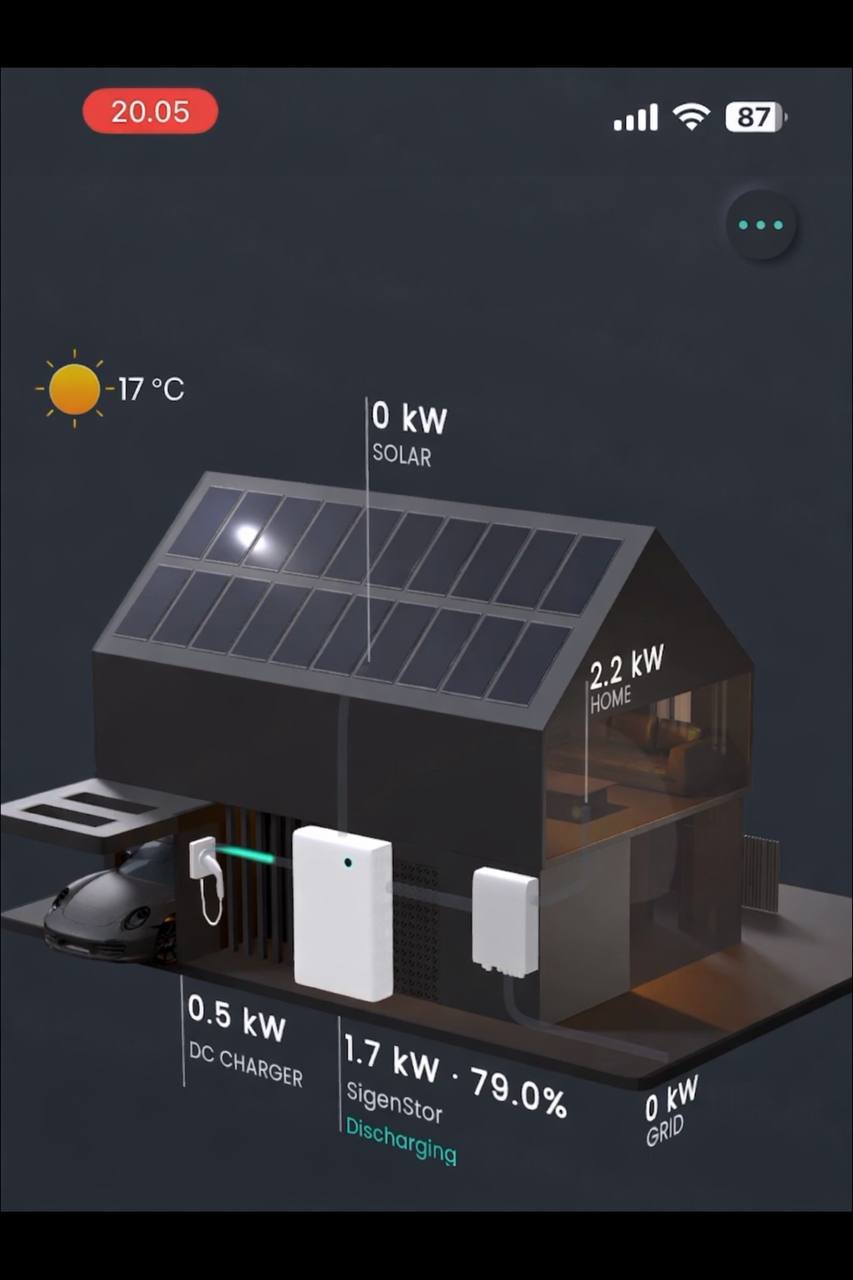
Sigenergy’s SigenStor is interesting because it is not just a charger or just a battery box. It is positioned as a 5-in-1 energy solution that pulls several layers into one system:
- solar integration
- inverter / energy control
- home battery storage
- EV charging
- backup power with bidirectional energy flow
That matters because a lot of V2H and V2G talk dies the second you hit real system complexity.
In theory, everyone loves the idea of using the car battery to support the house or the grid.
In practice, people run into the same wall every time:
- charger compatibility
- vehicle support
- tariffs
- control software
- grid rules
- warranty anxiety
- too many boxes on the wall doing half the job each
The promise of systems like SigenStor is not just that they support bidirectional charging. It is that they make the whole setup look more like a product and less like a science project.
That is a much bigger deal than it sounds.
The Denmark angle
If you look at Denmark through an infrastructure lens, the case for bidirectional charging is not really about novelty. It is about flexibility.
What the grid needs more of is not just raw generation. It needs the ability to shift when electricity is consumed, stored, and pushed back out.
That is where parked EVs get interesting.
A normal stationary home battery helps one house. Useful, but limited.
A parked EV with a meaningful battery, connected through a bidirectional setup, can do more:
- absorb cheap or excess power when supply is strong
- reduce household draw during expensive or constrained hours
- provide backup power locally
- potentially support the wider grid if market rules allow it
That last part is where the real upside is.
Denmark is adding more variable renewable generation, more electrified heating, more electric transport, and more load in general. That makes flexibility more valuable, not less.
If even a modest share of EVs become controllable distributed storage, the system gets options it does not have today.
Not infinite options. Real ones.
What this could help with
The obvious use case is household economics: charge when it is cheap, discharge when it is expensive, maybe use your car battery as backup.
Fine. Nice consumer story.
But the infrastructure story is more interesting.
Bidirectional charging could help Denmark by:
- flattening evening demand peaks
- reducing strain in local congestion windows
- soaking up renewable production that would otherwise be poorly timed
- creating more demand-side flexibility without waiting years for every grid reinforcement project to finish
That last point matters.
Grid expansion is necessary, but it is slow. Flexibility can move faster.
The adult answer is not “either build the grid or use flexible demand.” It is both.
What people get wrong about V2G
A lot of clean-tech writing treats vehicle-to-grid as if the hard part is proving the concept.
It isn’t.
The hard part is everything around it:
- regulation
- settlement models
- interoperability
- incentives
- user trust
- automaker support
The hardware is only part of the story.
You also need cars that support the right protocols, market structures that reward flexibility, and enough confidence that people do not feel like they are wrecking an expensive battery to save the grid operator a headache.
That is why I do not think the near-term Denmark story is “everyone will be doing V2G next year.”
Too neat. Too early.
The more realistic path is:
- smarter managed charging becomes normal
- V2H grows where the consumer value is obvious
- V2G expands once standards, tariffs, and business models stop fighting the product
That is slower than the hype cycle wants.
It is also how infrastructure actually changes.
My take
SigenStor-style bidirectional charging is interesting in Denmark for one reason above all:
it turns electrification from a pure load problem into a controllability opportunity.
That does not remove the need for grid buildout. And it definitely does not solve Energinet’s current bottlenecks on its own.
But it does point toward a better architecture.
A future where homes, batteries, cars, and grid signals are stitched together intelligently is just better than one where we keep adding intermittent generation and new electric demand while pretending timing does not matter.
That is the real point.
The next era of electrification will not be won by adding more devices. It will be won by making them coordinate.
And that is why bidirectional charging is worth watching much more closely.