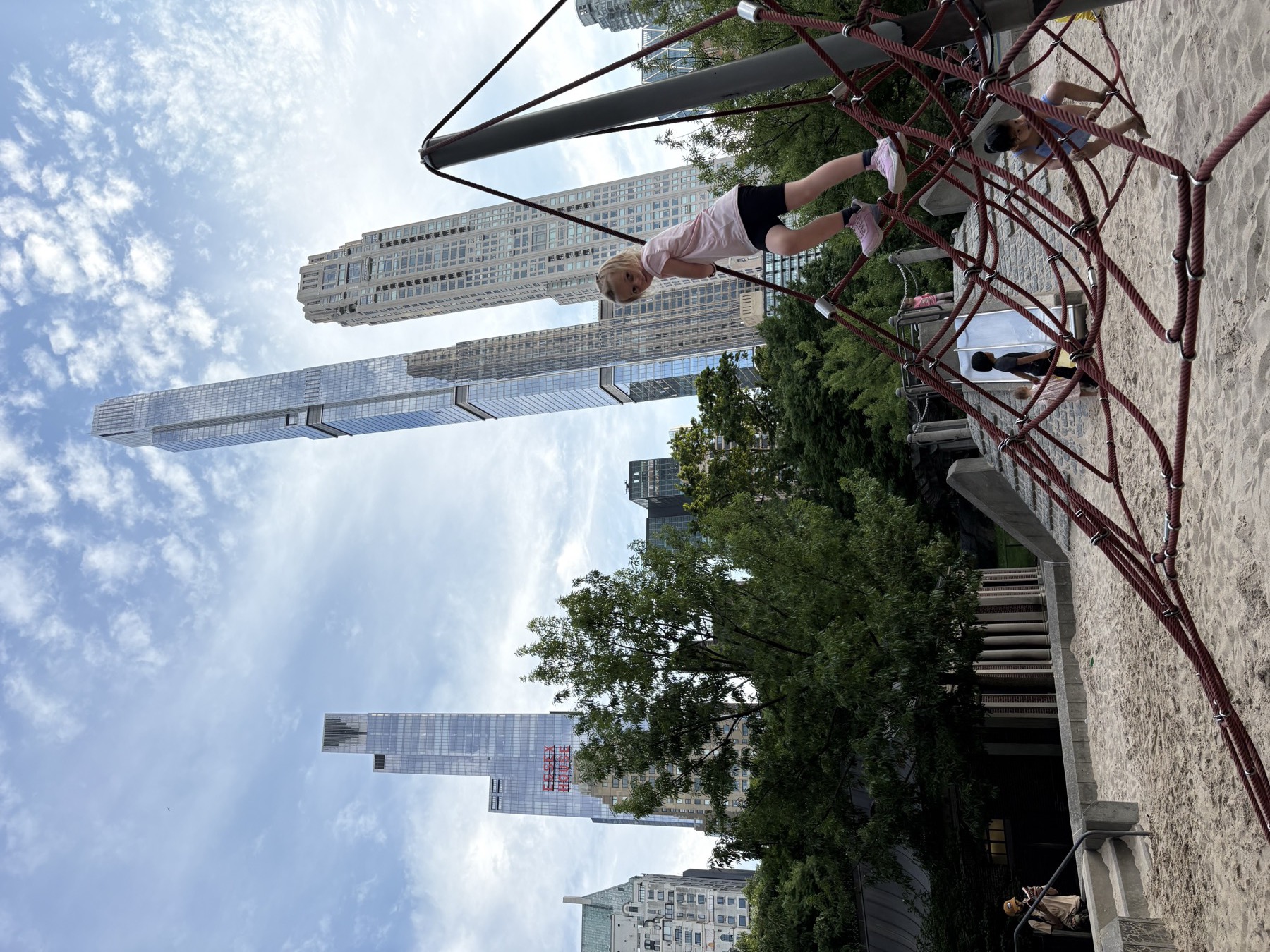
Before this trip, I already suspected Manhattan would work well for us.
Now I am fairly confident saying something stronger:
Manhattan is ridiculously good with small children.
That might sound like a strange conclusion if your mental model of Manhattan is just crowds, sirens, overpriced everything, and people walking like they are trying to win a contract.
But with a 1-year-old, a 5-year-old, and a stroller, the city has actually been far easier, calmer, and more fun than the usual internet advice would suggest.
I wrote earlier about why we chose this trip in the first place in Babymoon in Manhattan, with kids, direct flight, and zero interest in rushing.
This is the follow-up after actually walking it.
The big surprise
The biggest surprise is not that Manhattan has famous things.
Obviously it does.
The surprise is how often those famous things work with children instead of against them.
You can walk ten minutes and hit something that resets the mood:
- a playground
- a plaza
- a fountain
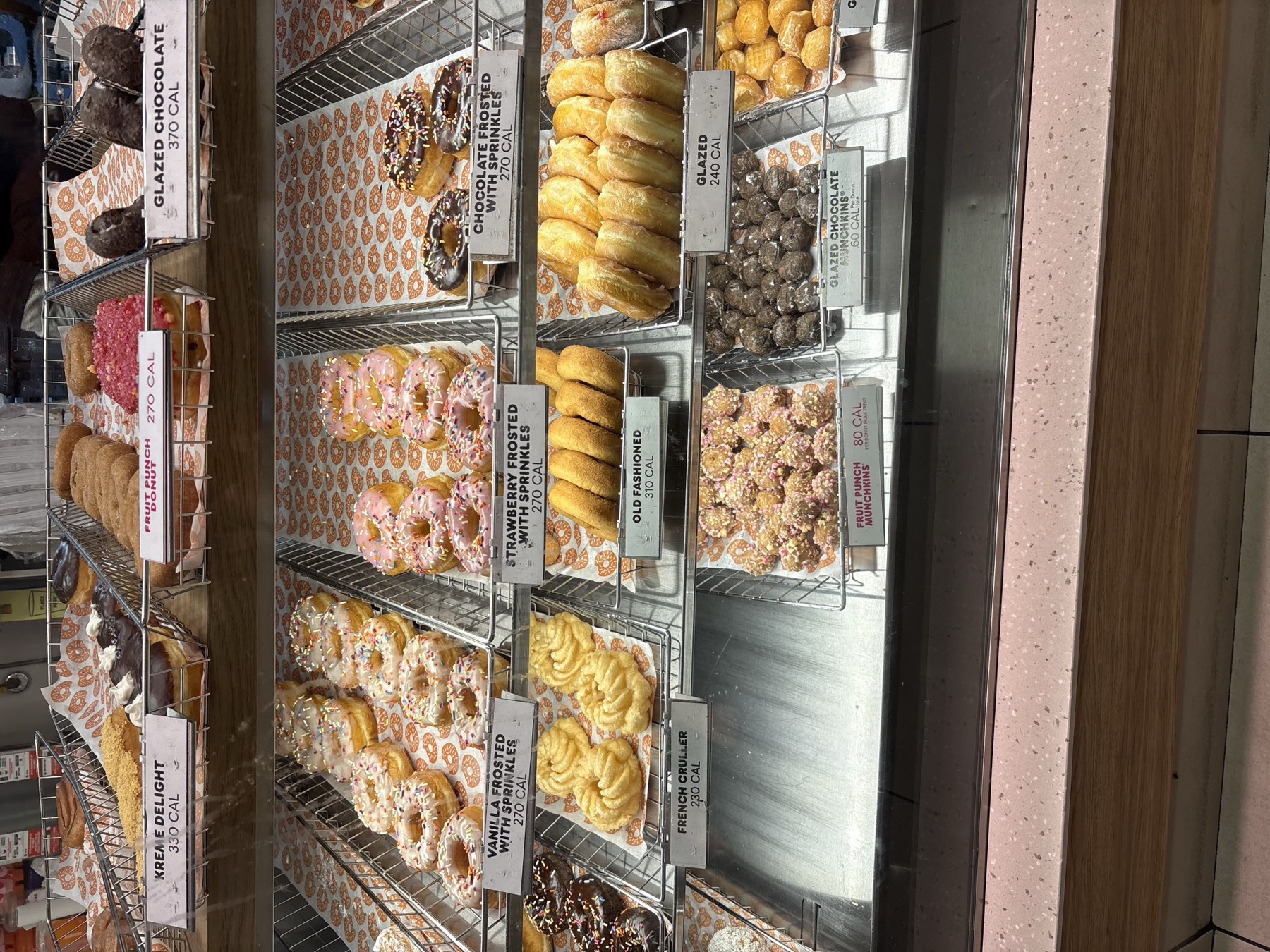
- a snack stop
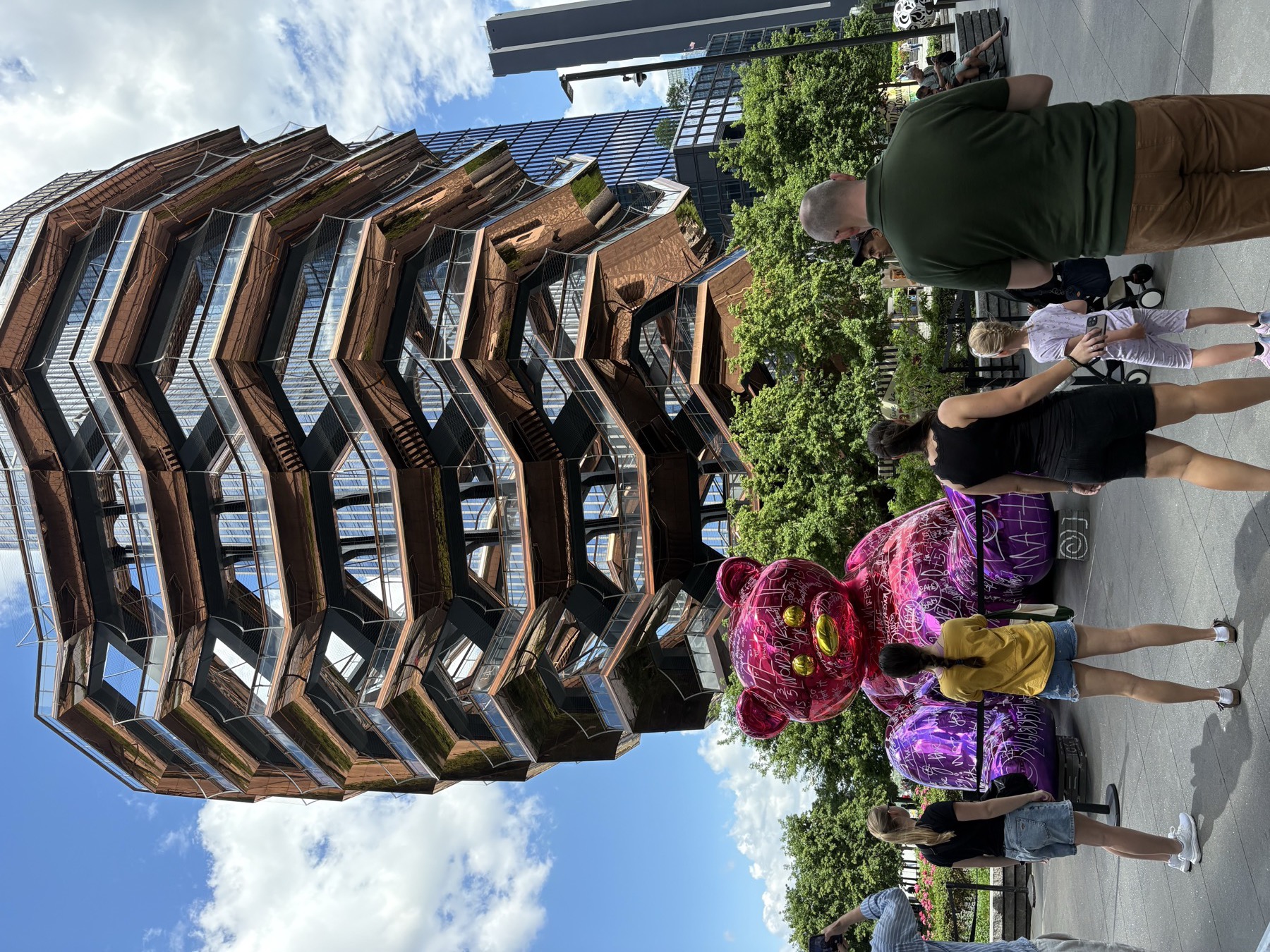
- a weird sculpture
- a big staircase
- a view that makes the adults happy again
That matters more than people admit.
Traveling with small children is usually not ruined by one major problem. It gets ruined by too many small frictions stacked too close together.
Manhattan is good because it keeps giving you release valves.
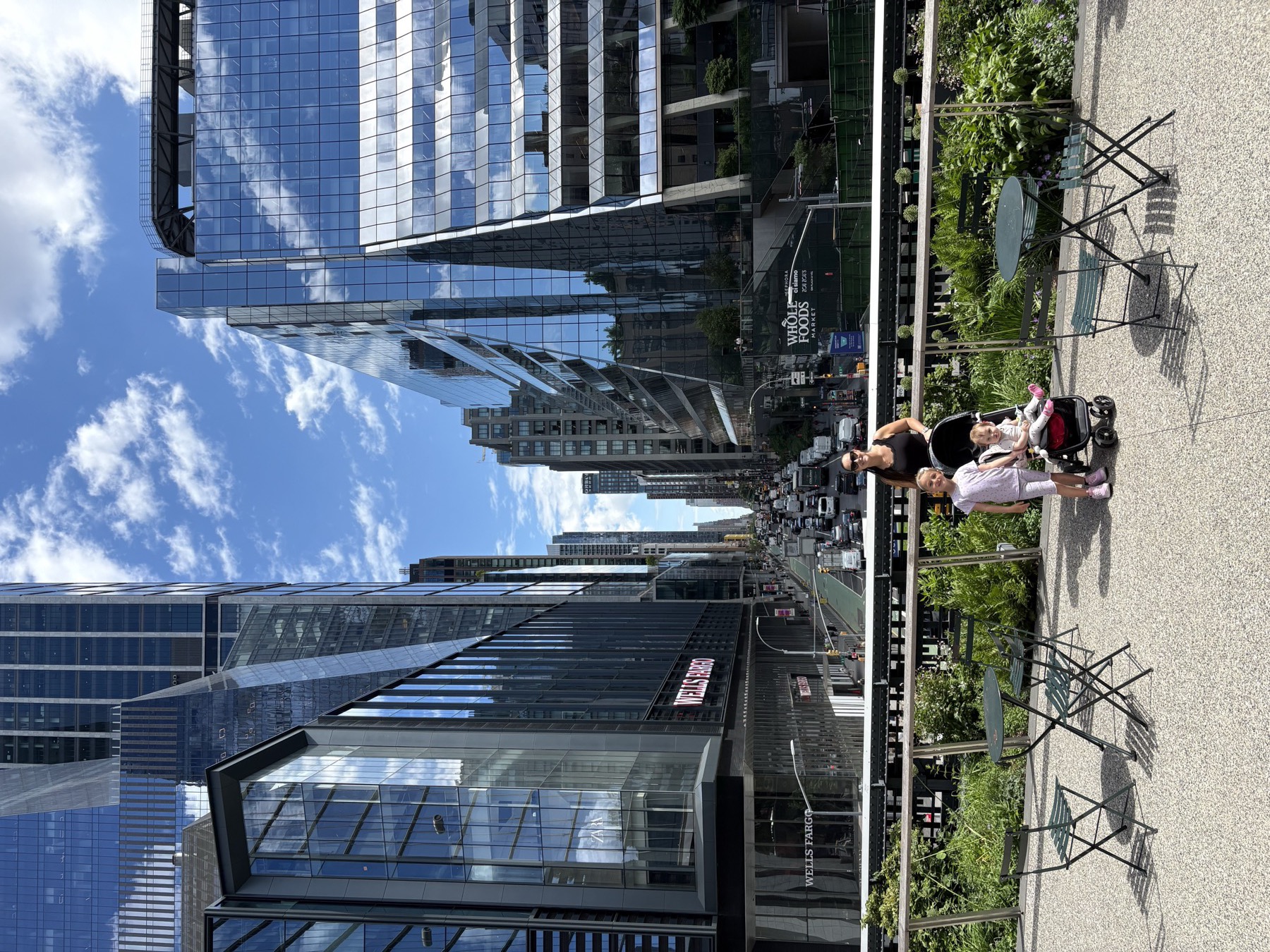
The city does some of the work for you
That is the real strength.
You do not have to manufacture entertainment every hour.
The city keeps presenting the next thing naturally.
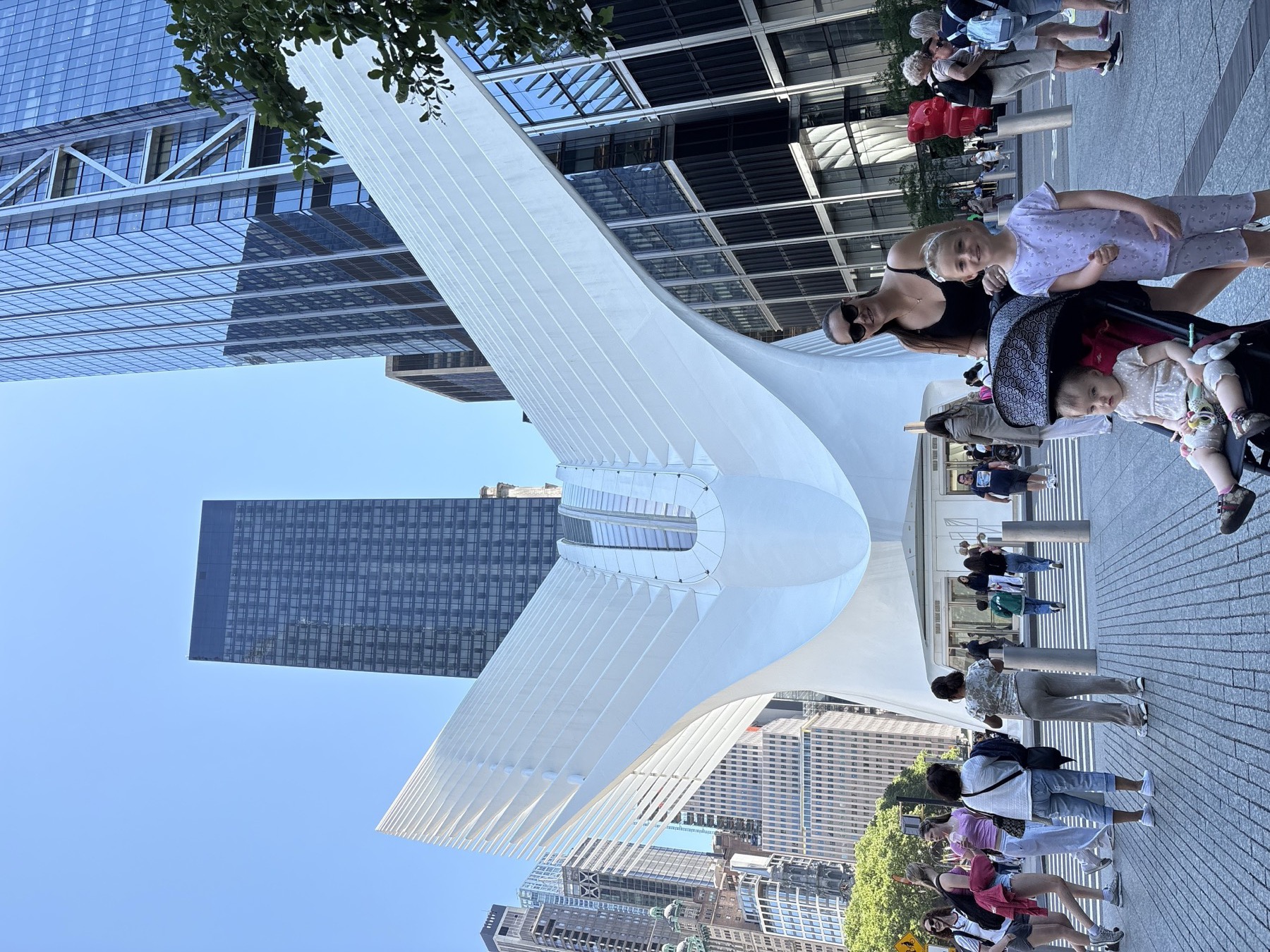
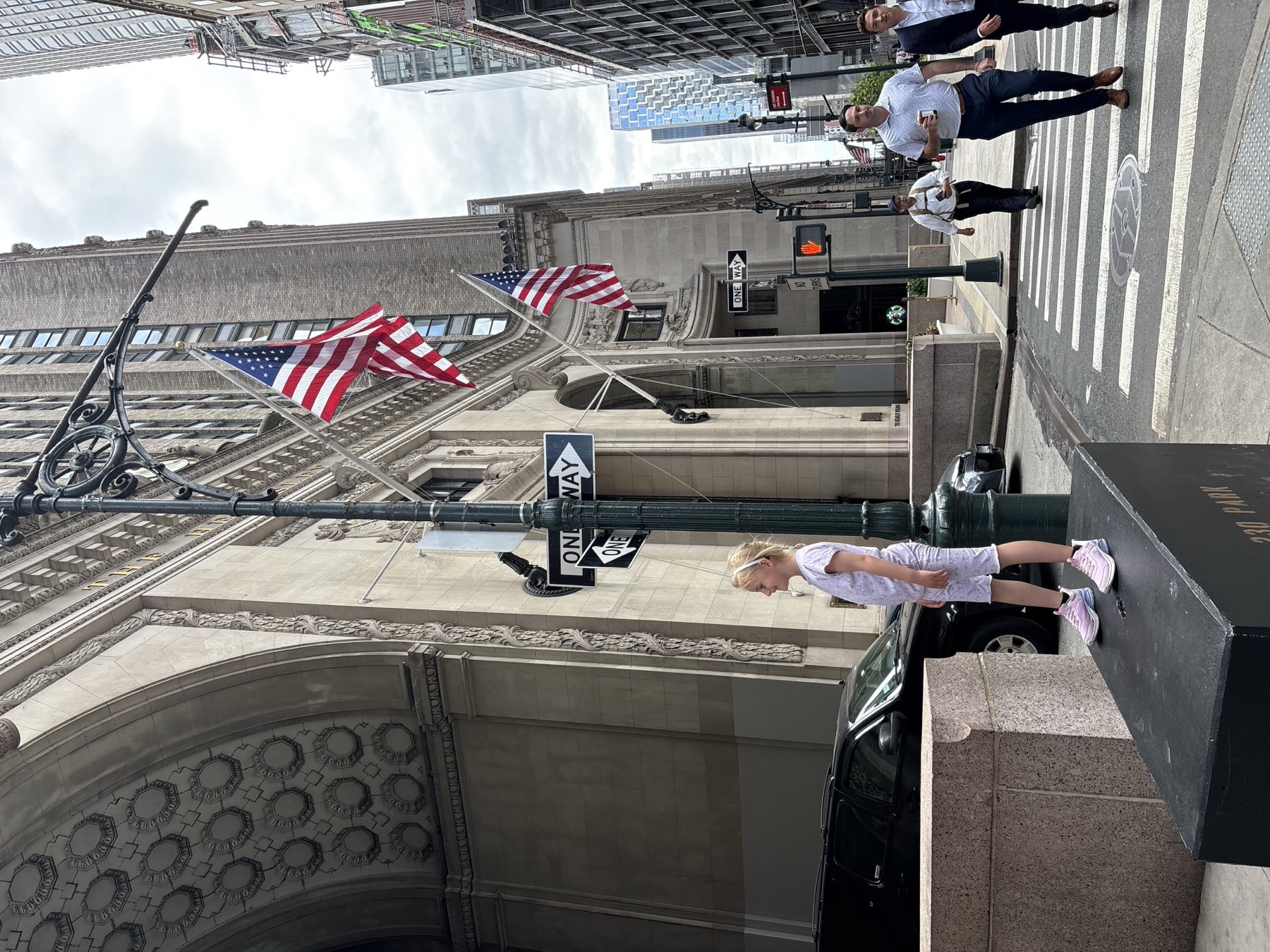
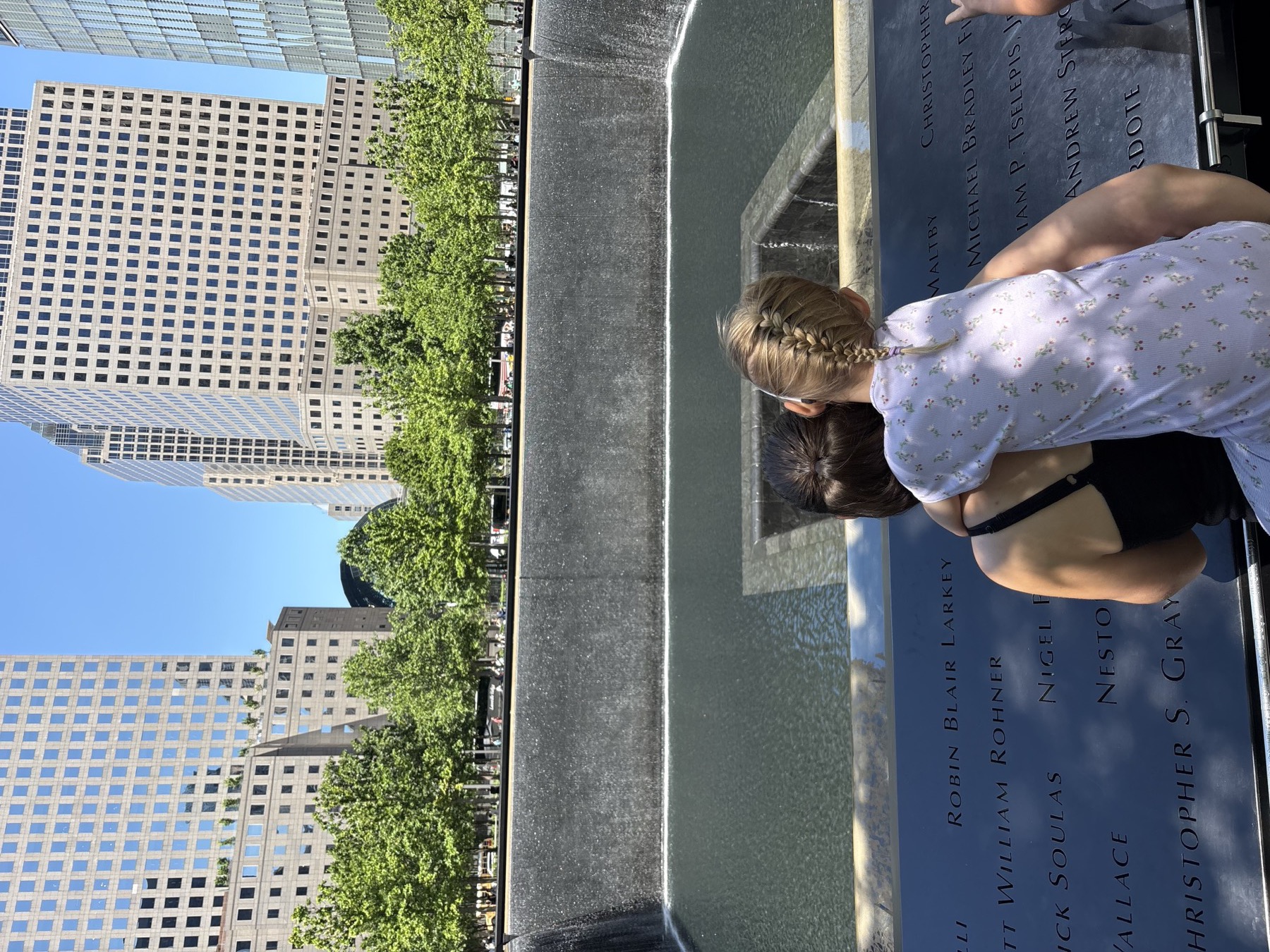
One minute you are down by Wall Street and the girls are looking up at the New York Stock Exchange. A bit later you are near the Oculus and everything suddenly feels futuristic and dramatic. Then you are by the 9/11 Memorial, where the atmosphere shifts completely and the city slows itself down for a moment.
Even places that are not “for kids” still work because they are visually big, easy to react to, and close together.
For adults, that means you still get to have an actual city trip.
For children, it means the day never feels like a forced cultural education program.
Playgrounds are everywhere
This is the part that deserves more credit.
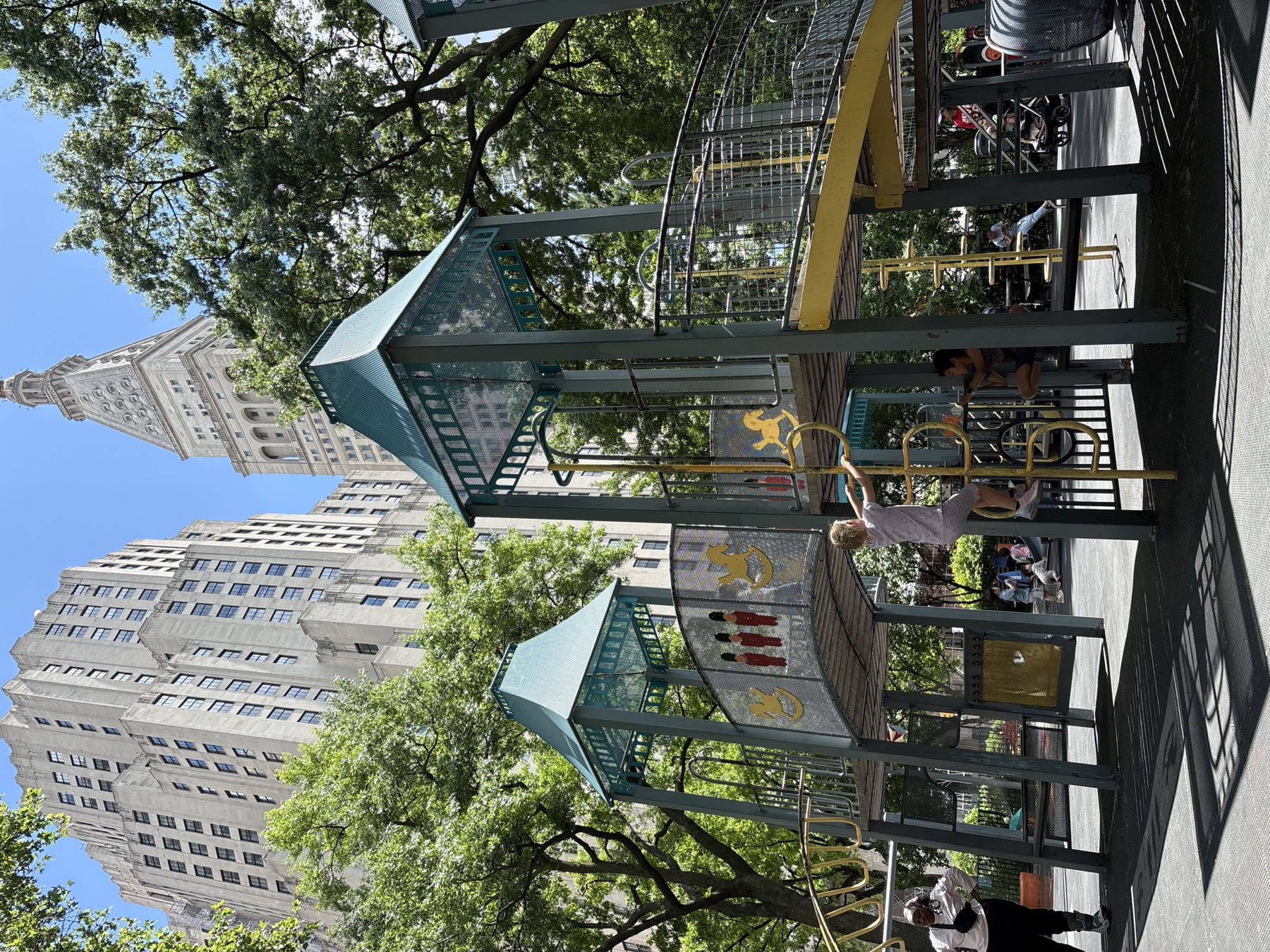
Manhattan is full of playgrounds.
Not in a theoretical, “I am sure there must be some if you research hard enough” way.
In a very practical, very useful, “there is another one right there” way.
That changes the whole rhythm of the day.
Instead of building a perfect plan and then watching it collapse once energy drops, you can just move through the city knowing there is almost always a place for the kids to run, climb, reset, or just be loud for a bit.
That makes the adult experience better too.
A playground stop is not a failure in the plan. It is what keeps the rest of the plan alive.
Manhattan works best when you stop trying to beat it
This is where people get the city wrong.
Manhattan is not hard with children because it is Manhattan.
It becomes hard when adults insist on treating it like a checklist with legs.
If you try to do five major sights, two museums, a lunch booking, and a forced sunset moment in one day, then yes, congratulations, you built your own problem.
If instead you pick an area, walk it properly, stop often, and let the city carry some of the load, it becomes a very different experience.
That has been the winning formula for us.
One proper area. One or two anchor moments. A lot of walking. No heroic scheduling.
The best kind of family city break
What makes Manhattan especially good is that it does not require you to choose between a trip for adults and a trip for children.
You can get both at once.
The adults get:
- the skyline
- the architecture
- the pace
- the restaurants
- the feeling of the city itself
The children get:
- motion
- constant visual stimulation
- playgrounds
- snacks
- ferries, fountains, and big open spaces
That overlap is rare.
In a lot of cities, “family friendly” quietly means “slightly boring for the adults.”
Manhattan does not have that problem.
A few places that worked especially well
Some spots have been especially good with small children:
- The High Line because it turns a normal walk into an event
- Hudson Yards because even the surrounding space feels big and easy
- The Oculus and World Trade Center area because there is room to move and a lot to look at
- Wall Street because the buildings make even a short walk feel cinematic
- Central Park, obviously, because it is still one of the best pressure-release valves any city has
Even the more dramatic, landmark-heavy parts of Manhattan stayed manageable because there was always a next pause point nearby.
That is the pattern.
The stroller question
Yes, the stroller matters.
But not in the way people sometimes frame it.
It is not about whether Manhattan is magically frictionless. It is not. Pavements are pavements. Curbs are curbs. Some stations are annoying. Some corners are chaotic. You are still in New York.
But the wider structure of the city helps enough that the stroller never became the defining problem.
The bigger factor was pace.
If you build the day around walking, short pauses, and not pretending children can run on adult momentum from morning to night, the whole thing becomes much easier.

My honest verdict
If you have small children and like real cities, Manhattan is much better than its reputation.
Not because it is calm. Not because it is cheap. Not because it was designed around family logistics.
It works because it is dense in the right way.
There is always something to look at, somewhere to pause, somewhere to eat, somewhere to sit, and very often somewhere for children to burn off energy before everyone starts negotiating badly.
That combination is worth a lot.
Would I do it again
Yes. Easily.
In fact, I now think Manhattan is one of those trips people overcomplicate before they go there with children.
If your plan is sensible, your pace is sane, and you accept that playgrounds are part of the architecture of a good day, it works absurdly well.
The city has energy, but it also has structure.
And with small children, that structure matters just as much as the skyline.
One more practical thing:
Pay the extra for a genuinely good hotel room, apartment, or suite where the kids actually have space to move around a bit.
You will not regret it.
When you travel with small children, the room is not just where you sleep. It is the decompression zone, the snack zone, the reset zone, and sometimes the only place where everyone can stop performing for a while. A cramped room turns small tensions into bigger ones very fast. A bit more space buys a surprising amount of peace.
So the short version is this:
Manhattan with small children is not a compromise trip. It is actually a very good one.