Most task systems fail for the same reason.
They work fine as databases. They are bad interfaces.
You can build a decent board, a clean mobile UI, and a tidy data model, and it still won’t matter if adding a task feels slower than just keeping it in your head.
That was the problem I wanted to solve with Household Chores in Home Assistant.
Not just “show tasks on a dashboard.” That part is easy. The useful part is making the system available when life actually happens.
So the build ended up as two connected pieces:
- a Home Assistant integration that manages household tasks properly
- an assistant workflow that can create, list, update, and delete those tasks through normal chat
That second part is the interesting one.
What we built
At the core is a custom Home Assistant integration for Household Chores.
Here’s what the board actually looks like on a tablet-sized Home Assistant dashboard:
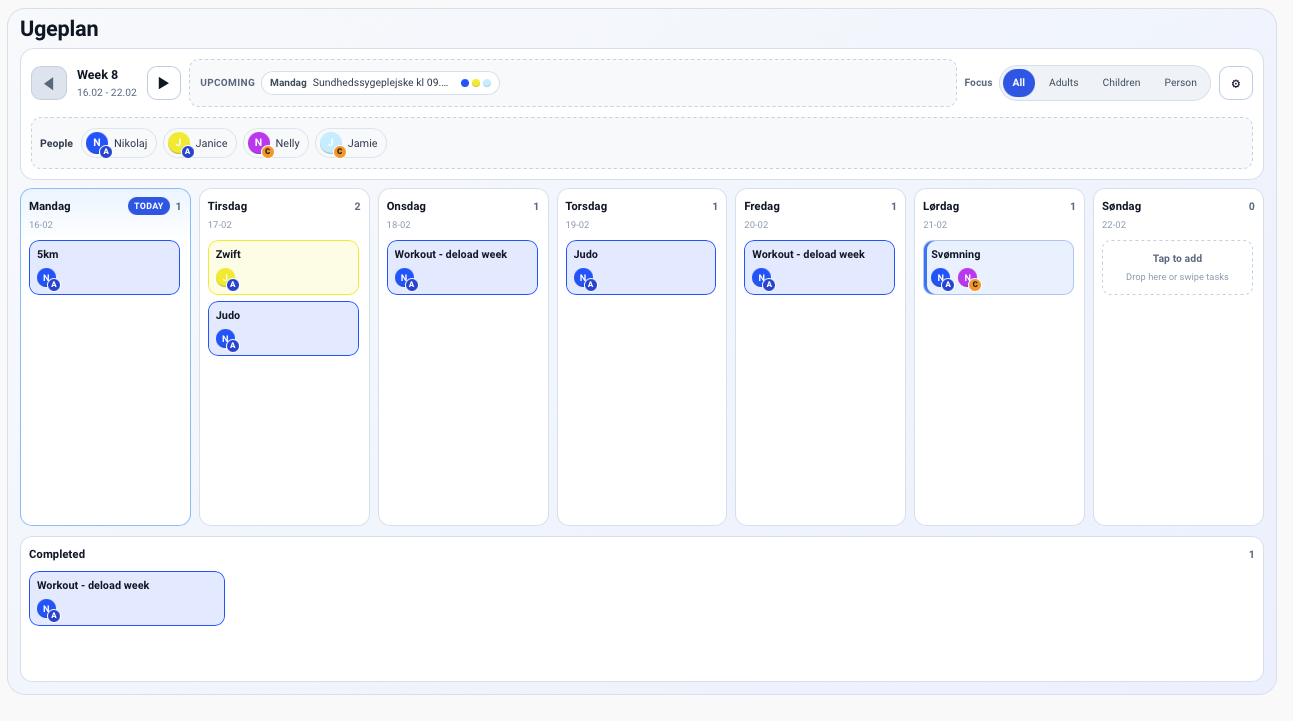
It handles the usual things you’d expect:
- boards
- people
- recurring tasks
- upcoming-task sensors
- per-person task views
- frontend card support
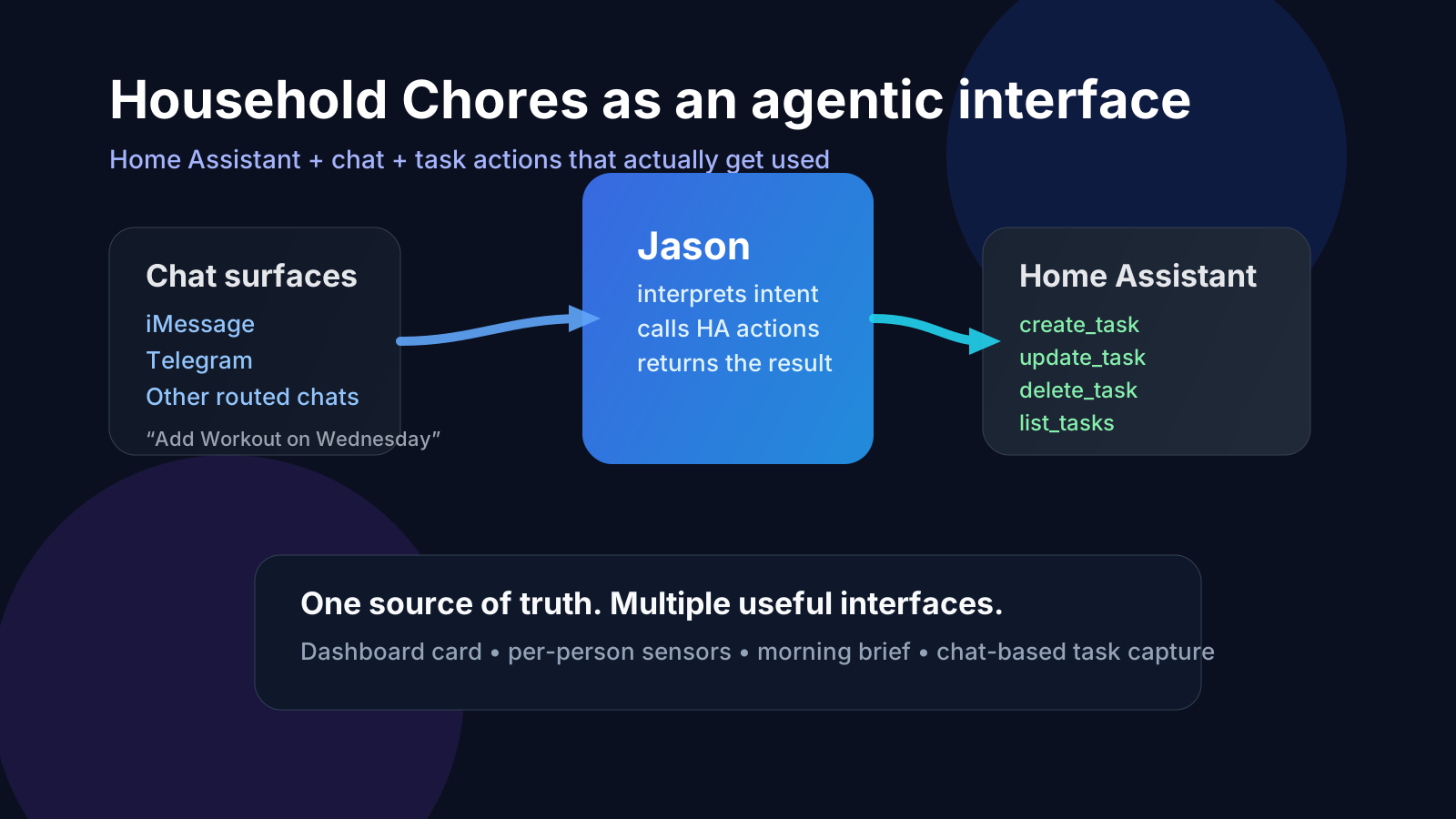
But the more important change is this: it now exposes service actions that make it usable from an assistant:
create_taskupdate_taskdelete_tasklist_tasks
That means the chores system is no longer trapped inside one UI.
It becomes a task layer that other interfaces can talk to.
A few practical details matter here, because this is exactly where a lot of household planners fall apart:
- the board supports week-by-week navigation instead of trapping everything in “this week only”
- it can plan forward up to three weeks ahead from the current week
- tasks can span multiple days instead of being forced into awkward one-day duplicates
- the same underlying data is exposed as sensors and service actions, not just a card UI
That last point matters. The board is not the product. The board is one interface to the product.
Why this actually matters
This is not interesting because it’s “AI + chores.” That’s just terrible positioning.
It’s interesting because household systems only become useful when the input path is frictionless.
If I can say:
Add “Workout” for Wednesday for Nikolaj
and it lands in Home Assistant correctly, the system starts competing with memory, sticky notes, and random half-finished chat threads.
If I have to open a dashboard, find the board, click the right day, choose the right person, and save it manually, I’ll do that far less often.
That’s where a lot of home automation ideas quietly die. Not because the backend is weak. Because the interaction cost is too high.
The assistant layer
I already have an assistant setup that can operate across tools, files, messaging surfaces, and APIs.
So instead of treating Household Chores like another isolated widget, I wired it into that assistant flow.
That means I can create tasks from normal conversations in places like:
- iMessage
- Telegram
- and, in practice, any other chat surface routed through OpenClaw
In real use, that looks like this:
Add 5km on Thursday for me
Or:
What are my next chores?
Or:
Move workout to Friday
Or:
Delete that school holiday task
The assistant interprets the message, calls the right Home Assistant action, and updates the board.
Not a toy. Not a mockup. Actual task operations.
What the system can do now
From the assistant side, the Household Chores setup can now:
- list upcoming tasks
- create new tasks
- update existing tasks
- delete tasks
- filter tasks per person
- expose upcoming chores through Home Assistant sensors
- feed those sensors into daily briefings
So the same system can drive:
- a dashboard card
- per-person task sensors
- a morning brief
- chat-based task capture
That’s the right shape.
One source of truth. Multiple useful interfaces.
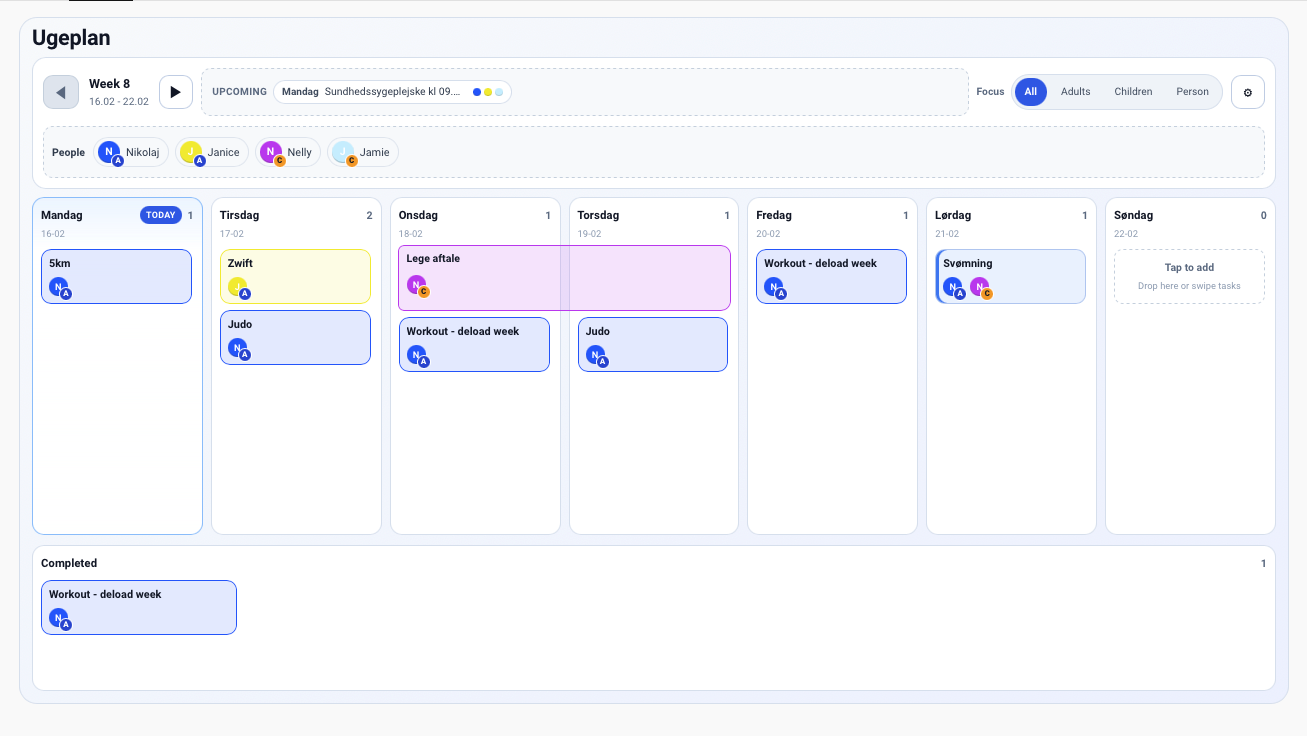
The board itself is built for touch-first planning, so dragging work between days is not some side gimmick. It is part of the normal interaction model:
Why chat beats a dedicated task UI
Household tasks don’t appear when you’re sitting calmly in front of a dashboard thinking about household architecture.
They appear when:
- you’re in the car
- someone sends you a message
- you remember something mid-conversation
- a kid activity changes
- you realize a recurring task needs to move
That’s why chat is a better interface than people think.
Not because chat is magical. Because it’s already where the interruption happens.
So instead of forcing people to context-switch into a task app every time, the system can meet them where they already are.
That matters more than clever features.
There is also a less flashy but important product point here: the board is not locked to a desktop view. It works on smaller screens too, which matters if the actual users are checking it from a phone in the middle of the day instead of admiring it from a wall tablet.
Home Assistant is a surprisingly good backbone for this
I like Home Assistant for this kind of thing because it’s not just “smart home.”
It’s a local automation and state platform with a very useful bias toward integration.
Once Household Chores lives there, it can connect to other things that already matter in daily life:
- briefings
- presence
- calendars
- notifications
- routines
- dashboards
- voice and chat interfaces
So the chores board is not isolated.
It becomes part of a broader family operating system.
That is far more interesting than building yet another standalone list app.
The morning brief is a good example
One of the things I wanted was a short morning brief that includes:
- global and market context
- Copenhagen weather
- solar production
- upcoming household chores
- a Nikolaj-only task section
That works because Household Chores exposes the right sensors, including a next-3-tasks view and per-person next-task sensors.
It also supports the kinds of planning details that usually get lost in simpler chore apps:
- multi-day tasks for things like holidays, travel, or school breaks
- future-week planning up to three weeks forward
- person-specific upcoming views so the assistant can tell me what is mine versus what belongs to the household in general
So the assistant can pull live Home Assistant state and say, in one message:
- here’s the weather
- here’s solar
- here are the next household tasks
- here are your tasks specifically
That’s the kind of cross-system usefulness I care about.
Not isolated features. Useful loops.
And that is really the whole point of this build: chores are not interesting on their own. The useful part is when they plug into the rest of the system.
This is the real promise of agentic assistants
A lot of people still think assistants are mainly for writing text.
That’s the boring version.
The useful version is when the assistant can take action in your actual systems.
In this case, that means the assistant is not just telling me what my chores are. It can help manage the system itself.
That shift matters.
The interface becomes:
Handle this for me.
instead of:
Let me manually update yet another app.
That’s the difference between AI as decoration and AI as an operating layer.
A couple of product details worth calling out
If you look closely at the board, a few things stand out.
First, it is not pretending households only live inside one calendar week. You can browse forward and plan ahead without turning the board into a mess.
Second, multi-day tasks are handled as actual spans instead of being hacked together as duplicate cards on consecutive days. That matters for things like trips, school holidays, or any chore that is really a time block rather than a single checkbox.
Third, the assistant layer means task entry is no longer tied to the board itself. The board is where the plan lives. Chat is where capture happens.
That split is important.
What I like about this build
The best part is that this is not abstract.
It’s not a prototype slide about the future of agentic AI.
It’s a grounded example of what happens when you combine:
- a real Home Assistant integration
- clear service actions
- structured sensors
- a chat-capable assistant
- normal messaging surfaces
You end up with something much more practical than a dashboard and much less annoying than a traditional task app.
And honestly, that’s where a lot of good automation lives: not in flashy demos, but in removing just enough friction that people actually use the thing.
Where this goes next
The obvious next steps are:
- better natural-language task parsing
- smarter task disambiguation
- cleaner confirmation flows in chat
- more context-aware filtering
- tighter connection between chores, calendar, and routines
But even in its current state, this already feels like the right model.
Home Assistant holds the truth. The assistant gives it a human interface. Chat makes it usable in the messy moments when life actually happens.
That’s a lot more interesting than another checkbox app.
If you’re building with Home Assistant, I think this is one of the more practical directions to push: treat your assistant as a real control plane for household operations, not just a thing that answers questions.